
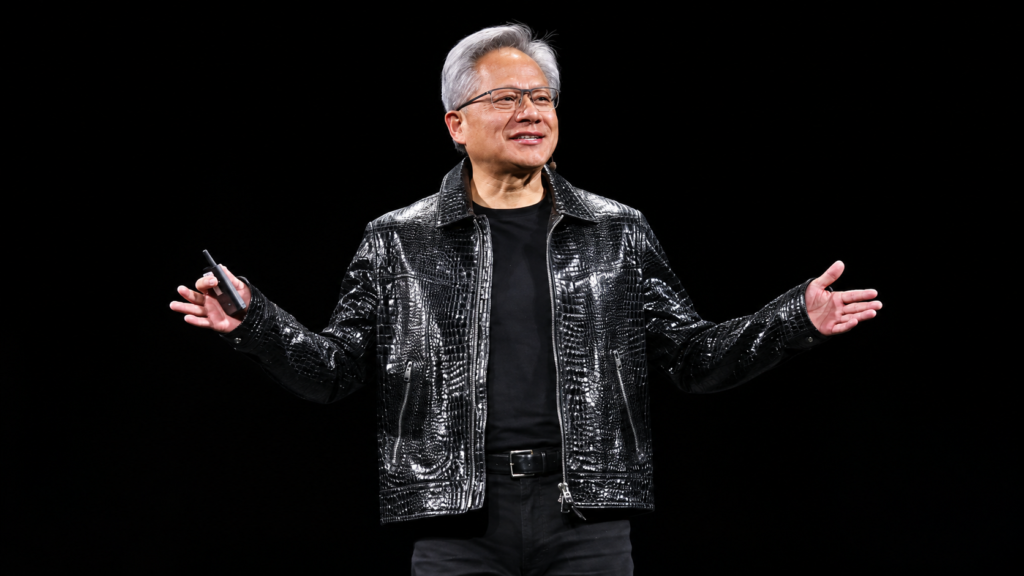
Nvidia’s exposure to geopolitical tensions has come into focus following reports of a US intelligence investigation involving the company’s CEO, Jensen Huang, and his reported association with a Chinese national suspected of gathering information for Beijing. The developments have coincided with a sharp decline in Nvidia’s share price, putting pressure on Huang’s personal wealth and adding uncertainty ahead of the company’s upcoming earnings announcement.
The market reaction was reflected in Forbes’ real-time billionaire rankings on Monday. Huang’s net worth dropped from $162.2 billion to $154.7 billion within the first 30 minutes of trading, moving him from eighth to tenth place. Nvidia shares opened more than 7% lower, at one point briefly pushing him out of the top 10 and reducing his fortune by an estimated $10.3 billion. He also fell below Berkshire Hathaway chairman Warren Buffett and Oracle co-founder Larry Ellison in the rankings.
The Allegations Behind the Investigation
The developments follow a report by The New York Times last month, which said US intelligence agencies had identified a close relationship between Huang and Alice Huang, a Chinese citizen suspected by Washington of gathering information for Beijing.
According to the newspaper, which cited a memo circulated within the Trump administration, Alice Huang had allegedly been recruited by China’s top spy agency to collect information about the Nvidia chief for the Ministry of State Security.
The report also noted that the two were photographed together at a bar in June 2024. Alice Huang has reportedly been connected to executives in the AI chip sector, including individuals associated with Gigabyte, a company that assembles Nvidia supercomputers.
She has described herself as the CEO of Megaspeed, a Singapore-based AI computing and cloud services provider. However, the company reportedly removed her as managing director from its official paperwork within eight months.
Megaspeed and the Wider Chip Export Concerns
Megaspeed’s business activities have drawn attention as part of the broader scrutiny surrounding China’s access to advanced semiconductor technology. Established in 2023, the company emerged after Chinese gaming and cloud computing firm 7Road spun off its overseas operations in Singapore. It partners with Nvidia and supplies its technologies across the Asia-Pacific region.
US authorities have reportedly been examining Megaspeed’s possible role in China’s access to Nvidia chips since 2024. Questions surrounding the movement of semiconductor equipment have also added to the concerns.
A US Commerce Department official reportedly found Nvidia equipment still packed in boxes at a data centre site in Malaysia, raising questions about whether the hardware could be transported elsewhere.
The matter is particularly sensitive given Washington’s restrictions on exports of advanced AI chips to China. These controls are intended to limit access to technologies considered strategically important to US national security.
Nvidia’s Response and Huang’s Position
Huang has apologised to Nvidia employees for his actions and said he supports the company’s investigation.
Nvidia’s board has appointed a committee of independent directors, along with external legal counsel, to examine the available information. The company has stated that it had “no reason to believe that either national security or NVIDIA secrets were compromised.”
An Nvidia spokesperson had earlier told The New York Times that Huang’s interactions with Alice Huang were not unusual, adding that meeting customers was part of his job.
US President Donald Trump has also defended the Nvidia CEO, describing him as an “honorable guy”. Trump has indicated that Huang would remain part of his upcoming visit to China.
Why the Developments Matter for Nvidia
The investigation arrives at a significant point for Nvidia, whose market valuation is closely linked to the global expansion of artificial intelligence infrastructure and demand for advanced computing chips.
The company has frequently competed with Apple for the position of the world’s most valuable publicly traded company, with its market capitalisation previously reaching approximately $4.5 trillion.
Its latest reported quarterly results underline the importance of its data centre business. The division generated $89 billion in revenue, an increase of 117% year-on-year, and accounted for approximately 92% of Nvidia’s total quarterly revenue of $96.2 billion.
Nvidia is scheduled to announce its next quarterly earnings on Tuesday after the market closes. The timing places the investigation alongside another important moment for investors, who will be assessing the company’s financial performance as well as the potential implications of geopolitical tensions and restrictions on chip exports.
According to the report, Nvidia was also the only company among the so-called Magnificent Seven to record a premarket decline on Monday.
Beyond the immediate impact on Huang’s wealth and Nvidia’s share price, the episode highlights the challenges facing companies operating at the centre of the global AI supply chain. As advanced chips become increasingly important to economic and national security interests, corporate relationships, international partnerships and export compliance are likely to remain closely scrutinised by governments and investors alike.