Raksha Bandhan is around the corner and GIVA has found itself at the centre of one of the festive season’s biggest advertising conversations.
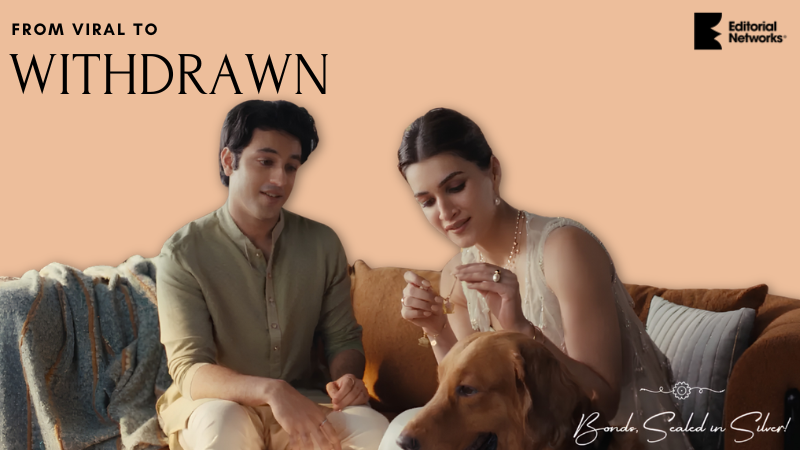
The jewellery brand recently launched Furever Sibling, a Raksha Bandhan campaign featuring brand ambassador Kriti Sanon. Built around the idea of pets being an integral part of modern families, the film showed Sanon tying a rakhi to her brother before extending the ritual to their pet. The campaign also marked the launch of GIVA’s Pet Collection featuring personalised silver pet charms and accessories.
The idea was simple: siblinghood and family are evolving and for many pet parents, their four-legged companions are family too. But soon after the campaign went live, the conversation took a very different turn.
From a festive campaign to a full-blown controversy
A section of social media users criticised Kriti Sanon’s outfit in the advertisement, questioning whether her contemporary Indo-Western look was appropriate for a Raksha Bandhan campaign. Others also took issue with the portrayal of tying a rakhi to a pet. What followed was a conversation that quickly became much bigger than the campaign itself.
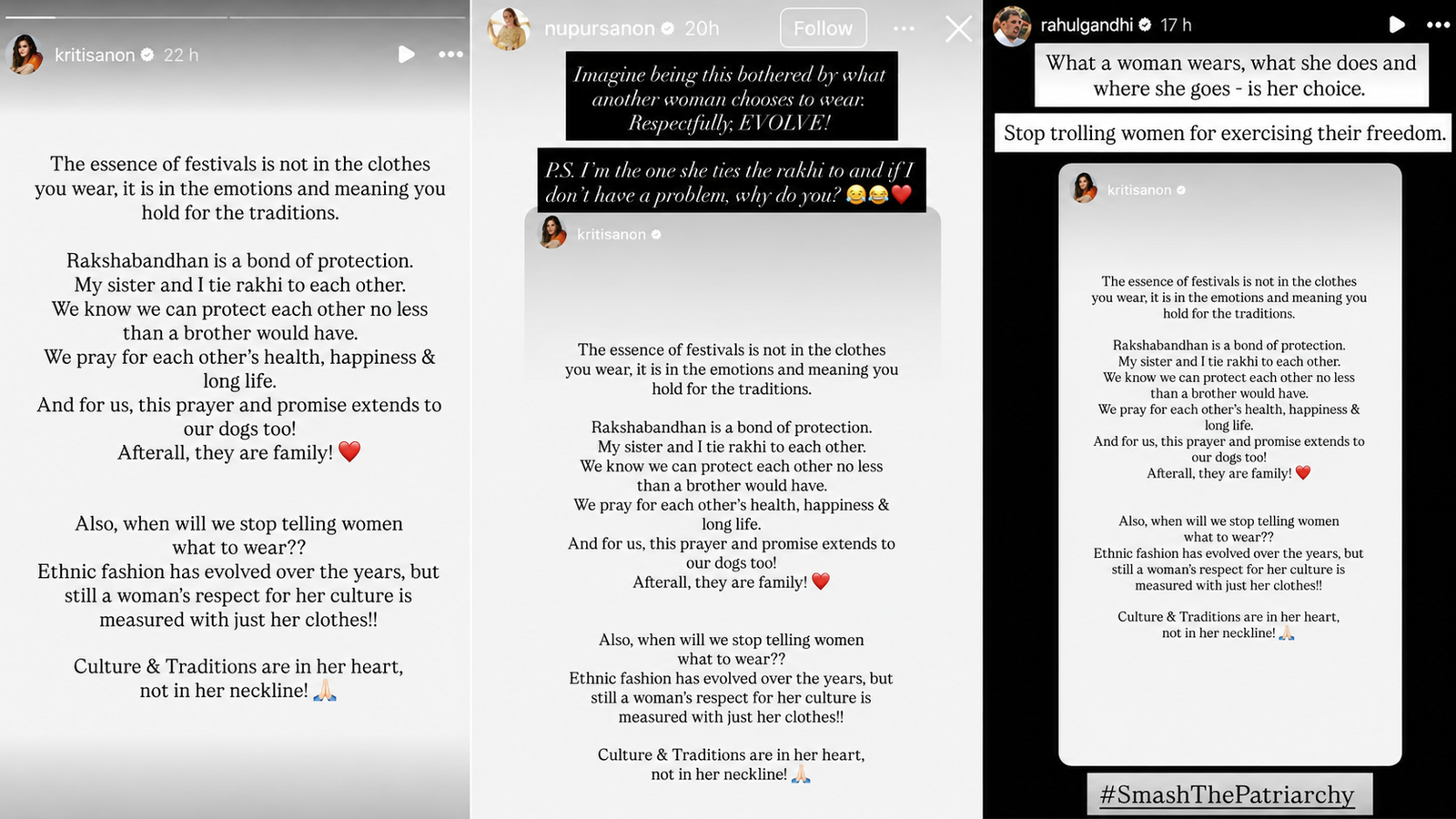
Kriti Sanon responded through an Instagram Story, explaining the personal meaning of Raksha Bandhan for her and pointing out that she and her sister tie rakhi to each other. Addressing the criticism around her clothing, she made her position clear: culture and traditions are in a woman’s heart, not in her neckline.
Her sister, Nupur Sanon, also publicly supported her, while Congress leader Rahul Gandhi shared Kriti’s response on Instagram and backed her right to choose what she wears, adding #SmashThePatriarchy.
Suddenly, a Raksha Bandhan campaign about pets had turned into a much larger debate around tradition, women’s clothing and personal freedom.
And then GIVA took the ad down
Despite the campaign generating massive attention, GIVA eventually withdrew the advertisement from all media.
In its statement, the brand said it had the highest regard for Indian culture, traditions and festivals, and that the campaign’s intention was to celebrate Raksha Bandhan with the entire family while extending that love to pets. However, acknowledging that the advertisement may have hurt the sentiments of some sections of society, GIVA decided to take it down.
And that is what makes the entire episode particularly interesting from an advertising perspective.
The campaign was created to launch a Pet Collection and celebrate an evolving idea of family. But within days, the product itself was almost lost in the conversation. Instead, people were debating Kriti Sanon’s clothes, the meaning of tradition, celebrity responses and eventually, the brand’s decision to withdraw the campaign.
The festive advertising dilemma
Festive season is one of the biggest opportunities for brands. It is when consumers are most emotionally engaged, gifting increases and brands compete to own cultural moments. But the same emotional connection that makes festivals commercially powerful also makes them incredibly sensitive territory.
Brands increasingly want to reinterpret traditions for a younger and evolving audience. But as GIVA’s campaign shows, a modern interpretation can also invite very different reactions.
Furever Sibling may have been withdrawn, but it has already become a case study in how quickly a festive campaign can move beyond a brand’s control.
Because in today’s social media-driven advertising landscape, a campaign can launch with one message but once the internet takes over, the conversation can become about something entirely different.